

You wanna make a resolution?
Then start a revolution. Within yourself.
Instead of the morning bathroom mirror pep talks and mantras, tell the person in your mirror that you love them and that you’re proud of them.
Take a walk in the woods. Notice the trees; all the different kinds of trees. Big ones, small ones, tall straight ones, smaller crooked ones. Oaks, maples, and who knows what other kinds. Notice all these trees and then notice how you just accept these different kinds of trees for what they are. You don’t get all hung up about the crooked ones or the pines if the maple trees are your favorite. You just accept them as they are and walk on.
Now try that with the people around you and see what you notice. Can you really accept them for who they are or do you get hung up on something?
Go back to the mirror for a minute.
Instead of lashing yourself and telling yourself you can do better, just admit how hard you’re being on yourself. We’re all human, and we’re all gonna make mistakes and we’re all gonna be way too hard on ourselves. Nobody here is an enlightened master. But here’s a spoiler; even enlightened masters screw up. Give yourself a break. For once. Can you really do it?
It’s just three things but it’s so much, isn’t it?
A long time ago, Khalili Gibran wrote “And God said to love your enemy. And I obeyed Him and loved myself”.
Let’s make 2022 so much better than 2021. I have faith in us.
Gratitude
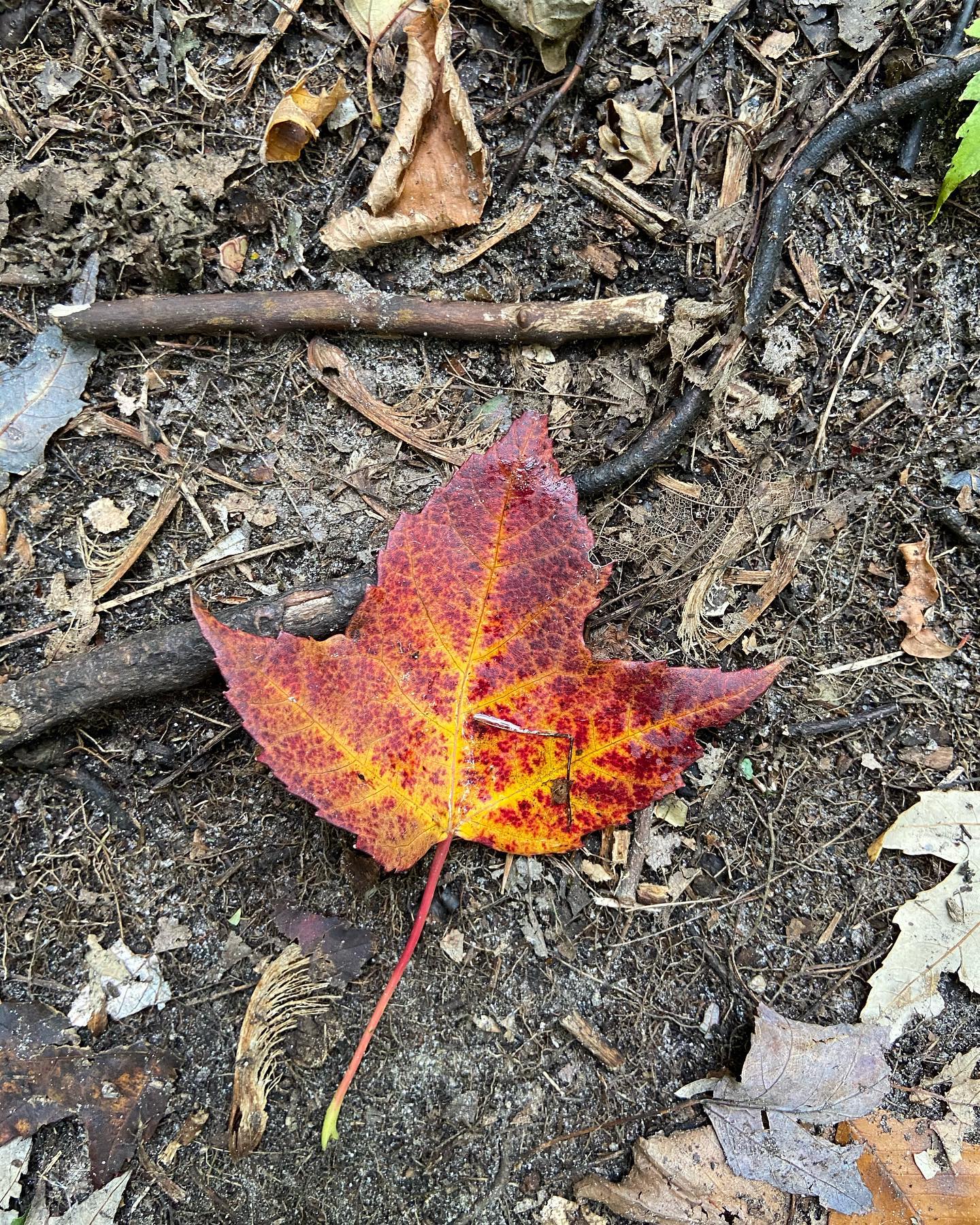
When we practice being thankful, we go through the process of counting our blessings, acknowledging the wonderful people, things and places that make up our reality. While it is fine to be grateful for the good fortune we have accumulated, true thankfulness stems from a powerful comprehension of the gift of simply being alive. When we feel it, we feel it regardless of our circumstances. In this deep state of gratitude, we recognize the purity of the experience of being, in and of itself, and our thankfulness is part and parcel of our awareness that we are one with this great mystery that is life.
It is difficult for most of us to access this level of consciousness as we are very caught up in the ups and downs of our individual experiences in the world. The thing to remember about the world, though, is that it ebbs and flows, expands and contracts, gives and takes, and is by its very nature somewhat unreliable. If we only feel gratitude when it serves our desires, this is not true thankfulness. No one is exempt from the twists and turns of fate, which may, at any time, take the possessions, situations, and people we love away from us. Ironically, it is sometimes this kind of loss that awakens us to a thankfulness that goes deeper than just being grateful when things go our way. Illness and near-miss accidents can also serve as wake-up calls to the deeper realization that we are truly lucky to be alive.
We do not have to wait to be shaken to experience this state of being truly thankful for our lives. Tuning in to our breath and making an effort to be fully present for a set period of time each day can do wonders for our ability to connect with true gratitude. We can also awaken ourselves with the intention to be more aware of the unconditional generosity of the life force that flows through us regardless of our circumstances.
.
#thanksgiving #blessings #breath #gratitude #beherenow
Underneath the Surface

Often, when we’re unhappy, we fall into the habit of thinking that, if only one or two particular things in our life would change, everything would be fine. We might focus on the fact that we need a new car, or a raise, or a change in our living situation. We dwell on this one thing and strategize, or complain, or daydream about what it would be like to have it. Meanwhile, underneath the surface, the real reason for our unhappiness sits unrecognized and unaddressed. And yet, if we are able to locate and explore the underlying cause of our discontent, all the surface concerns have a way of working themselves out in the light of our realization.
Maybe we really do just need a new car, and maybe moving to another city would improve our life situation. However, it can only help to take some time to explore what’s going on at a deeper level. Sometimes, when we take a moment and stop focusing on external concerns, we get to the heart of the matter. We might realize that all our lives we’ve been dissatisfied, grasping at one thing after another, only to be dissatisfied about something else once we get what we want. Or perhaps we’ll notice a pattern of running away from a place, or a relationship, when things get too hard. We might then wonder why this keeps happening, and how we might work through the difficulty rather than just escaping it. The point is, slowing down and turning our attention within can save us a lot of energy in the long run, because it is very often the case that there is no external change that will make us happy.
Once you’ve taken the time to inquire within, you can begin to make changes that address the deeper issue. This can be hard at first, especially if you’ve grown used to grasping for outside sources in order to quell your discontent, but in the end, you will be solving the problem at a deeper level, and it will be much less likely to recur.
Judgement

Though it is human to evaluate people we encounter based on first impressions, the conclusions we come to are seldom unaffected by our own fears and our own preconceptions. We see the world as we are, and not as it actually is. Additionally, our judgments are frequently incomplete. For example, wealth can seem like proof that an individual is spoiled, and poverty can be seen as a signifier of laziness — neither of which may be true. At the heart of the tendency to categorize and criticize, we often find insecurity. Overcoming our need to set ourselves apart from what we fear is a matter of understanding the root of judgment and then reaffirming our commitment to tolerance.
When we catch ourselves thinking or behaving judgmentally, we should ask ourselves where these judgments come from. Traits we hope we do not possess can instigate our criticism when we see them in others because passing judgment distances us from those traits. Once we regain our center, we can reinforce our open-mindedness by putting our feelings into words. To acknowledge to ourselves that we have judged, and that we have identified the root of our judgments, is the first step to a path of compassion. Recognizing that we limit our awareness by assessing others critically can make moving past our initial impressions much easier. Judgments seldom leave room for alternate possibilities.
Mother Teresa said, “If you judge people, you don’t have time to love them.” If we are quick to pass judgment on others, we forget that they, like us, are human beings. As we seldom know what roads people have traveled before a shared encounter or why they have come into our lives, we should always give those we meet the gift of an open heart. Doing so allows us to replace fear-based criticism with appreciation because we can then focus wholeheartedly on the spark of good that burns in all human souls.
Back to the Beginning
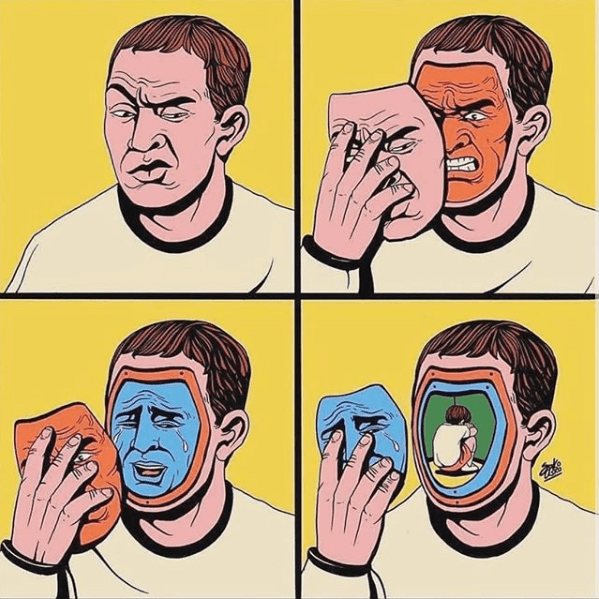
One of the most powerful and honest images there is.
If we find ourselves repeating the same behaviors in different jobs, with different partners and in different situations; and if we don’t go back and examine how it all began, we’re just treating symptoms instead of the cause.
Sensitive: The Untold Story
I found this documentary inspiring and personally validating. This was my own childhood, described to the letter.
Twenty percent of the population has been identified as Highly Sensitive. And both men and women EQUALLY make up that 20 percent population. Some of most creative people in the world are also in the Highly Sensitive category.
How relevant this is today, and also very consistent with the type of work that I do with people.
So glad to see this coming into more mainstream focus and awareness.
The film is currently on Amazon’s streaming service, and also at http://www.sensitivethemovie.com
Sit with it

Sit with it.
Instead of drinking it away, smoking it away, sleeping it away, eating it away, sexing it away, or running from it,
Sit with it.
Healing begins by feeling.
Fire Ceremony

A practice that can be done at year’s end to help usher in the new and escort out the old is to take some time and write (hand write) down some things that you want to release and then burning the paper in a fire.
It can be as simple as a single word, or as complex as you need it to be. But spend time on it; at least a couple of hours. You can do this over several days, but don’t rush or skimp on your writing time.
Then on New Year’s Eve, you can light a fire. It can be a small fire bowl, a fire-pit, or your fireplace. Safely light a fire and sit with the fire for a few minutes’ time. Don’t rush this. Close your eyes and sit with your fire and what you want to release for a few minutes. See what you want release, see how much you want to move on from it. Then see the smoke rise in your mind as you release what you need to.
When you’re then ready, safely drop your paper(s) into your fire. See the paper burn up, and the smoke rise, releasing you. Anything that’s held you back, it’s time to let it go. .Allow yourself to experience whatever you will about this as your paper burns away; anger, fear, anxiousness, sadness, loss, gratitude. Let it all out like the rising smoke from the burnt paper.
Close with an affirmation. Close your eyes again and say goodbye to the past once and for all, and to whatever has been holding you back. See yourself in your new life without what you released. Feel the relief, like a weight finally off your shoulders. Take a deep breath and let the exhale extend, like the last bit of release.
It can be helpful to write out your new intentions, something on paper as a reminder to create your new life. Re-visit in three months to check your progress. And finally, re-visit next year to see how you’ve done.
Let’s all make 2021 our best and most free year yet.
Veterans Day

On this Veterans/Armistice Day we salute all veterans and active military personnel, with appreciation for their tremendous service to our country.
But not all Veterans have had such a welcoming homecoming experience.
The transition from civilian life to one of military is tough enough. But returning home after duty is a completely different kind of transition for many Veterans.
No more rigid environment. Nobody setting your schedule for you. No more camaraderie with the other troops. You’re in charge of your own life again. And if you saw combat, it can be much more emotionally devastating. It can be very difficult to make that psychological transition back home and back into civilian life again.
If you see a Veteran, not just on Veterans Day but any day; thank them for their Service but also sincerely ask them how they’re doing? Your question may spark a need for support. Below are some resources available:
In the Detroit area, Veterans support can be found at:
Detroit Regional Offices of Veterans Services
https://www.benefits.va.gov/Detroit/veterans-services-orgs.asp.
Michigan Veterans Affairs Agency, which connects Vets to Benefits and Resources
https://www.michiganveterans.com
The Michigan Veterans Foundation offers support in the form of:
- Veteran Rescue Program
- Transitional Housing
- Vocational and Life Skill training
- Health care services
- PTSD Counseling
- Transportation, meals and clothing
- Substance Abuse Intervention
- Legal Assistance and Housing Placement
http://www.michiganveteransfoundation.org.
The Michigan Veterans of Foreign Wars provides assistance will filling out and submitting VA forms and processes, and also offers a Buddy to Buddy program that can pair up Veterans that can support each other to help handle the transition back to civilian life.
https://vfwmi.org/di/vfw/v2/default.asp?pid=8899
Painting info:
Norman Rockwell (1894-1978), “The Homecoming,” 1945. Cover illustration for “The Saturday Evening Post,” May 26, 1945. Norman Rockwell Museum.
Scientists show how Gratitude literally alters the Human Heart and Molecular Structure
 “A group of prestigious and internationally recognized leaders in physics, biophysics, astrophysics, education, mathematics, engineering, cardiology, biofeedback, and psychology (among other disciplines) have been doing some brilliant work over at the Institute of HeartMath.
Their work, among many others, has proven that when a person is feeling really positive emotions like gratitude, love, or appreciation, the heart beats out a different message, which determines what kind of signals are sent to the brain.”
Because the heart sends signals to the brain, feeling gratitude consistently can actually re-wire your brain; creating more receptors for such emotions and can be a great tool in overcoming depression and anxiety.
 William Schmidt Counseling